
The Dunedin Food Story
Written by Nicola McConnell, Founder of Eat Drink Dunedin
Welcome to Ōtepoti Dunedin - a city where history is served hot on a plate and savoured in a glass..
When people think of Dunedin, Scots heritage, grand Victorian architecture, rugged coastal wildlife and vibrant street art often come to mind. But look a little closer and you’ll find that Dunedin has quietly served as the culinary engine room of the south. From grain mills and pioneer breweries to cult chip-shop delicacies and circular-economy distilleries, Dunedin’s food story is as rich as our dark stout.
Here’s how our southern city shaped the way New Zealand eats and drinks.
Kai Tahu our First Settlers and the Origins of Ōtepoti
Long before Dunedin was settled by Scots, southern waters and sheltered bays sustained vibrant communities of early Māori. Moving south from the north island from the 17th century, Kāi Tahu ancestors established themselves across the southern landscape. They built an intimate knowledge of seasonal cycles, soils and fishing spots.
The upper harbour where Dunedin stands today became known as Ōtepoti - a name rooted in food and place. Drawing on an older meaning of poti, referring to a corner - which resembled the early harbour - and a kete (woven food basket), Ōtepoti describes a sheltered corner rich in mahika kai, traditional food-gathering resources. From kai moana and freshwater fish to seasonal plant harvests, the area was treasured as a larder - a heritage of harvesting and hospitality that shapes Dunedin’s identity today.

Kai Tahu food gathering and place names, Hori Kerei Taiaroa 1880. From https://kahurumanu.co.nz/
Millers, Brewers & Early Pioneers 1860s–1870s
Dunedin’s food industry boomed off the back of the 1860s Otago gold rush, giving birth to brands that remain household names today:
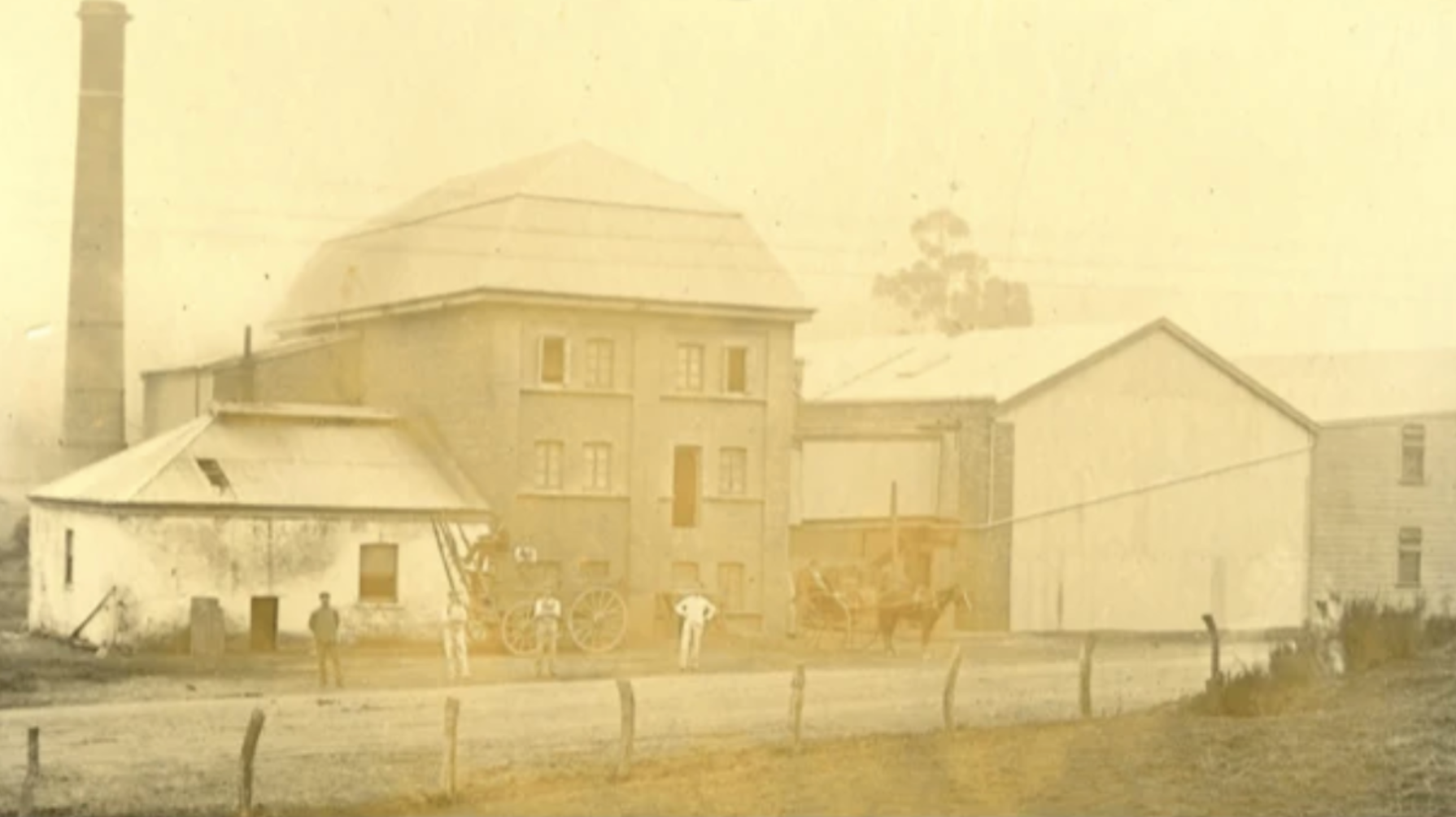
Harraways Mill, c. 1890s c/- Toitu Settlers Museum, Collection, Dunedin, Ref. 72_26-0
Harraways Oats 1867: Milling in Green Island for over 150 years, Harraways holds the crown as New Zealand’s oldest operating oat mill, fuelling frosty southern mornings with hearty porridge for generations.
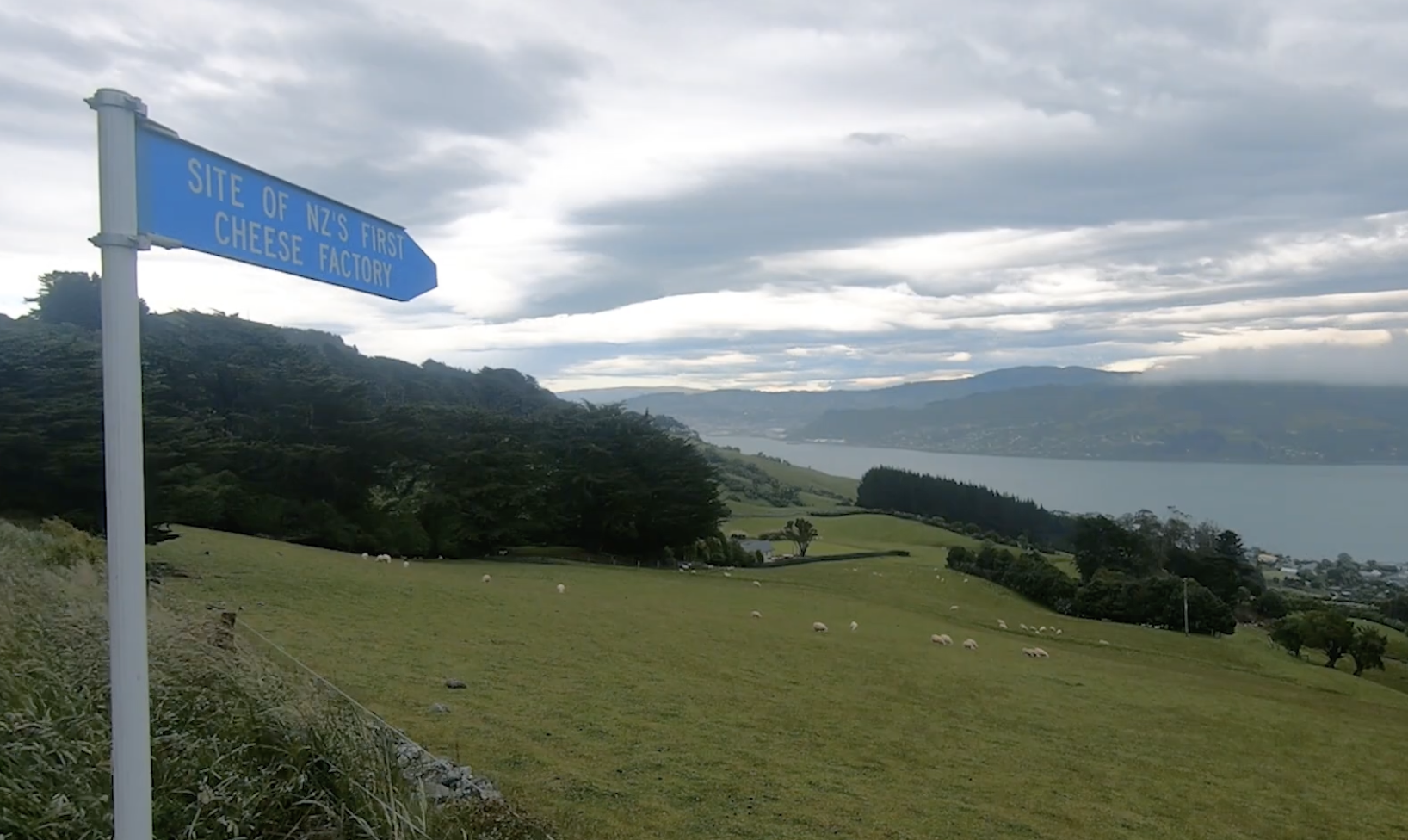
Today the site is marked with a sign on Highcliff Road, Otago Peninsula
New Zealand’s First Cheese Factory 1871: In August 1871, eight Otago Peninsula farmers gathered at John Mathieson’s "Springfield" homestead to form New Zealand’s first cooperative dairy company.
Turning Mathieson’s stone barn into a factory, they crafted four tons of Dunlop cheese in their first season - pioneering the legendary co-op model that would go on to shape Kiwi dairy history forever.
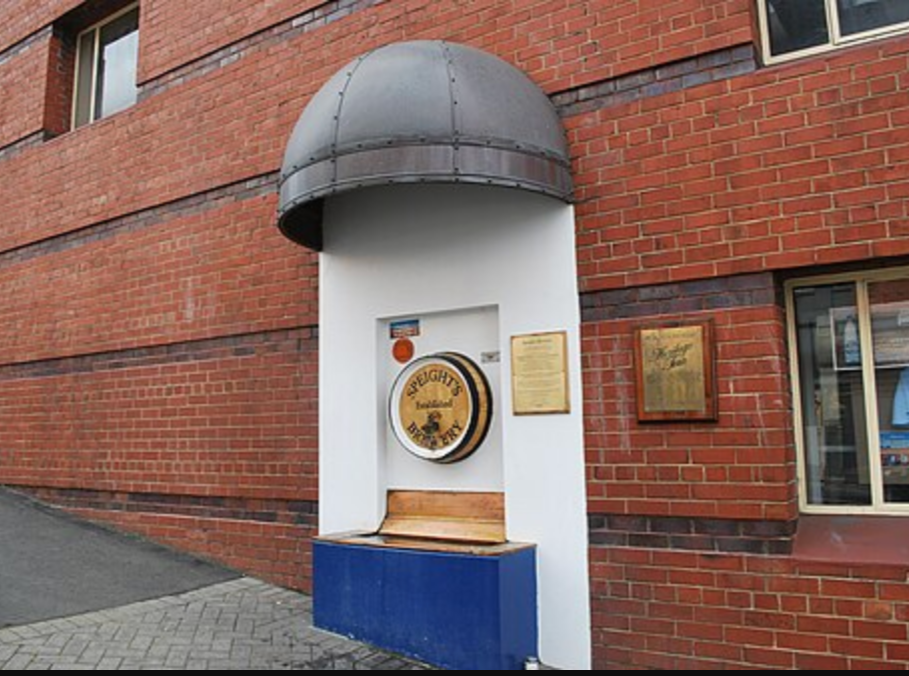
The Dunedin-famous Speights tap on Rattray Street
Speight's Brewery 1876: Founded on Rattray Street by James Speight, Charles Greenslade and William Dawson, Speight’s quickly earned its moniker as the "Pride of the South" - drawing fresh spring water that still flows from its public street tap.
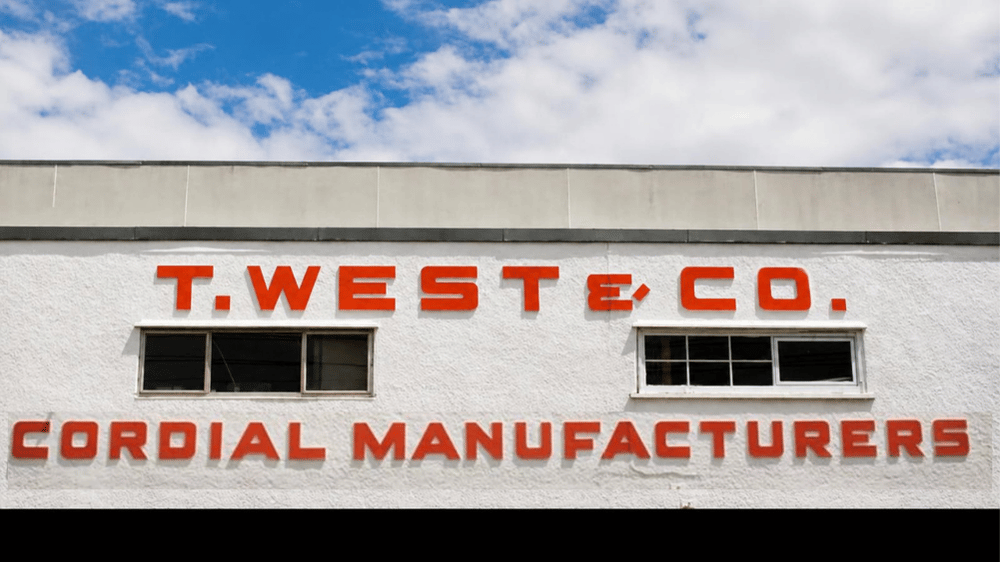
Wests built their factory in 1914 on Bay View Road, from where they craft iconic southern fizz and cordials today.
Wests Cordials 1876: The same year Speight’s began brewing, Wests set up. Founded by English immigrant Tom West from his grocery store, it pioneered the city's first commercial ginger beers. Wests created Protein Cream milkshake syrup - a blend of caramel and vanilla which is Eat Drink Dunedin founder, Nicola’s lifelong favourite.

The sailing ship Dunedin made a 98-day voyage through tropical heat and roaring seas to deliver nearly 5000 frozen carcasses of lamb and mutton.
February 1882: The sailing ship Dunedin departed Port Chalmers on an audacious 98-day voyage to London, carrying 5,000 frozen carcasses in her refrigerated hold.
Arriving in prime condition, that single daring shipment saved a struggling colonial economy, launched New Zealand’s modern export industry, and transformed how the world eats forever.
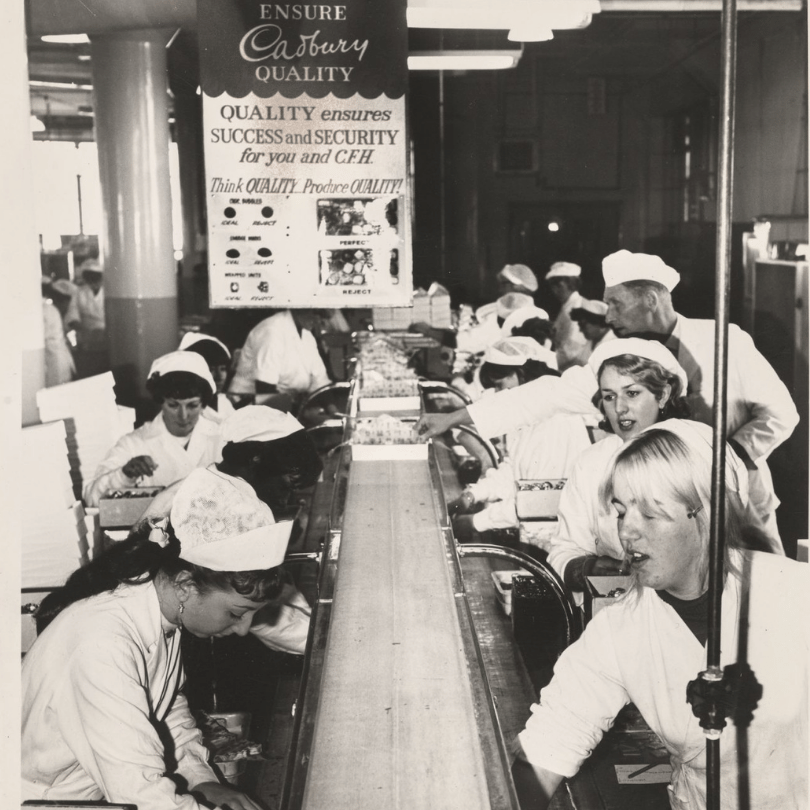
Cadbury Fry Hudson Dunedin Factory Production line in around 1960.
Richard Hudson's Chocolate 1868: Starting as a humble bakery, Hudson built the Southern Hemisphere’s first chocolate factory in Moray Place, laying the groundwork for a 150-year chocolate-making legacy that eventually became Cadbury Fry Hudson. The factory made Cadbury Dairy Milk bars from 1930 until it closed in early 2018.
Southern Comforts: Pavlova, The Cheese Roll & Hokey Pokey
No exploration of Dunedin food is complete without paying homage to our beloved regional staples:

True Kiwi ‘Pav’ aka Pavlova is served on the Eat Drink Dunedin New Zealand Food Tour.
Pavlova Dunedin 1928: While Australia often claims the pavlova, one culinary paper trail leads straight to Dunedin.
University of Otago professor Helen Leach, says the breakthrough was naming the dessert after Russian ballerina Anna Pavlova. In September 1928, Dunedin resident Rosina Henrietta Rutherford published the very first recipe for "pavlova cakes", small coffee-flavoured meringues.
A month later, a handwritten note inside a North-East Valley church cookbook provided the crucial missing link: "Auntie Lis" suggested poking a hole in Rutherford’s meringues to fill them with cream and fruit, creating the earliest known record of the dessert we recognise today.
We claim Dunedin ingenuity named the Pavlova, topped it with cream, and sparked New Zealand’s national dessert obsession.
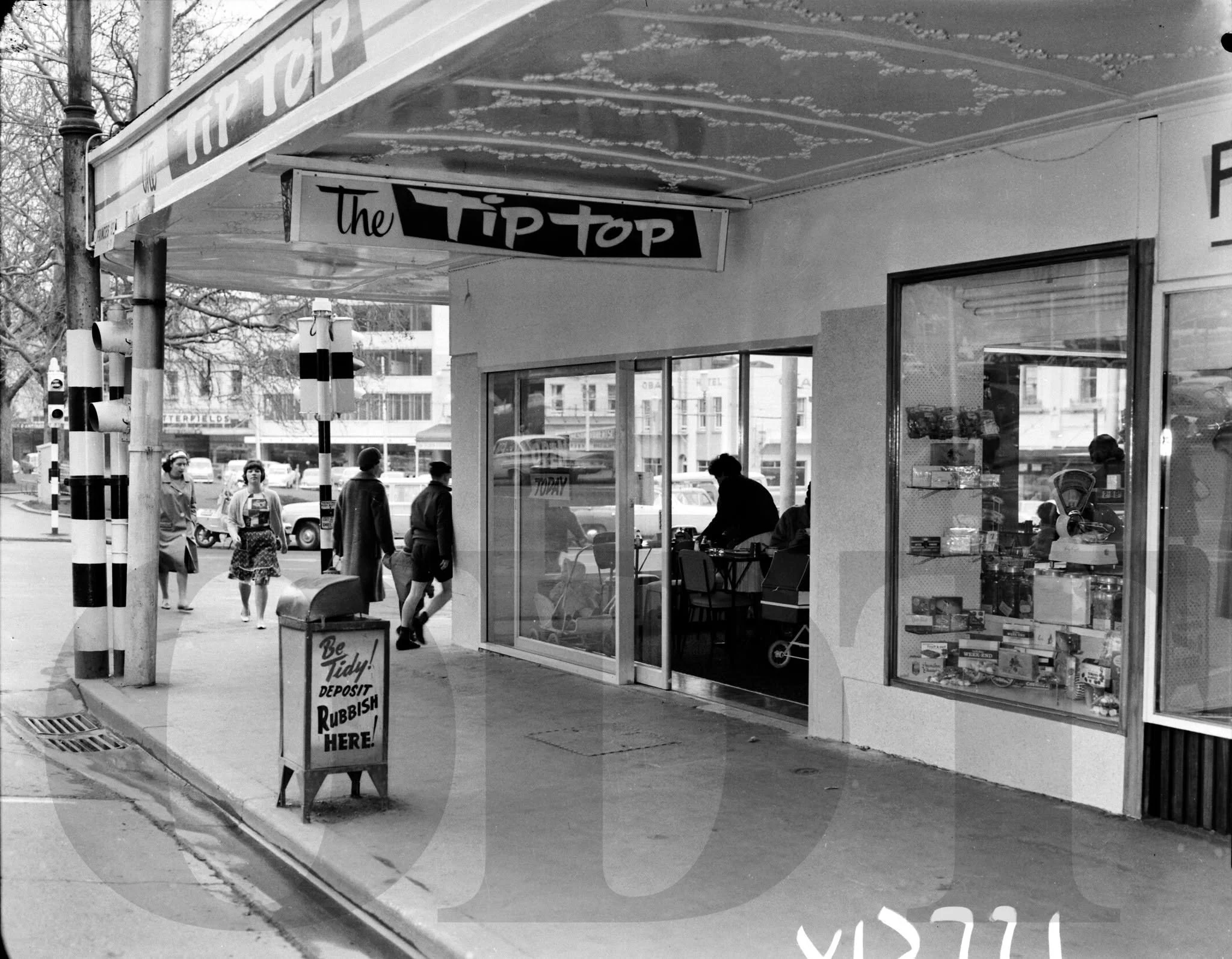
Tip Top Cafe operated on the corner of the Octagon and Princes Street from 1936 until 2007.
1935: Before Tip Top became a Kiwi household name, its was first ice cream was developed in Dunedin. In 1935, dairy innovator Len Malaghan teamed up with Bert Hayman to launch a milk-bar chain. Before that, Len had been working at the Dunedin Ice Cream Manufacturing Company, where he formulated a new ice cream recipe. Instead of paying him out for the recipe he negotiated a discounted supply of ice cream for the new Tip Top Milk Bar he and Bert opened in Wellington. The Dunedin factory shipped the ice cream to Wellington for their first shops. In 1936, Bert’s original store in the Octagon become Dunedin’s Tip Top Cafe. See the full story here.
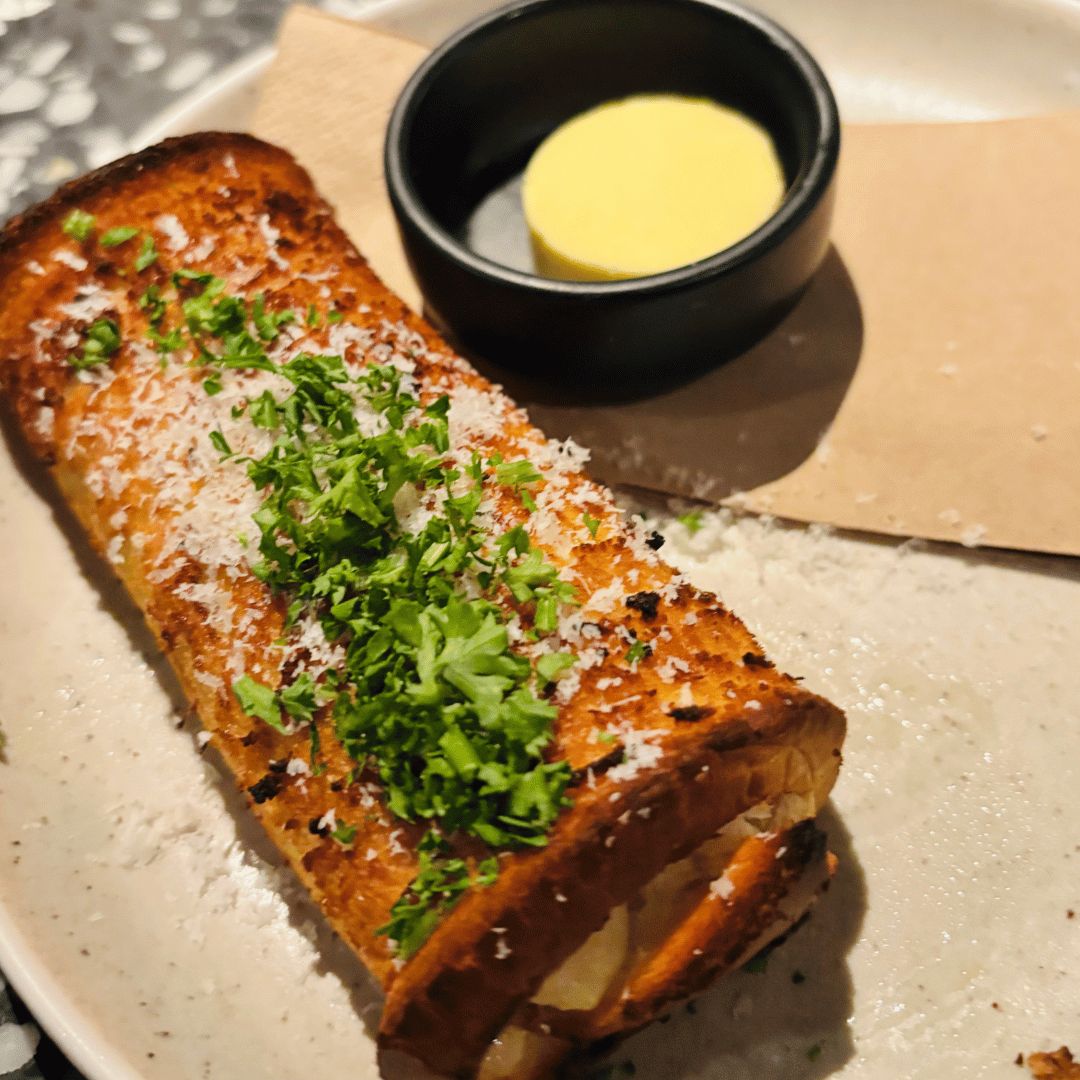
White bread rolled with grated cheddar, evaporated milk and packet onion soup is toasted and drenched in butter.
Cheese Rolls 1951: The Cheese Roll is a certified Otago treasure. While variations date earlier, the first known printed recipe in appeared in the 1951 Roslyn Church Jubilee Cookery Book. When pre-sliced sandwich bread hit grocery shelves in the 1950s, the recipe became unstoppable. Today its often made in batches as a community fundraiser.
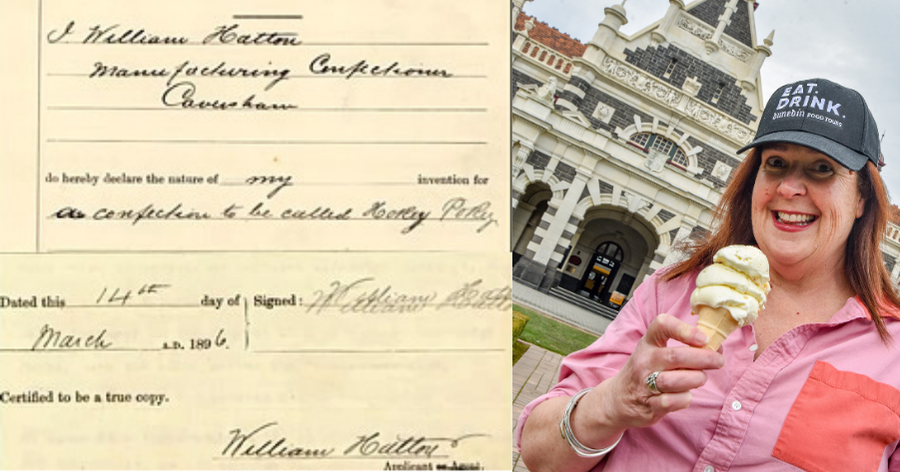
With thanks to Chris Newy for this New Zealand Ice Cream history.
Hokey Pokey Ice Cream 1953: Long before it was scooped into cones across the country, hokey pokey belonged strictly to Ōtepoti.
It started in March 1896, when Dunedin confectioner William Hatton filed a New Zealand patent for a bubbly golden toffee he officially named "Hokey Pokey." Fast forward to 1953 - Brian Simon at Dunedin’s Newjoy Ice Cream had the inspired idea to grab broken Crunchie pieces from the Cadbury factory and fold them into vanilla ice cream.
Craft Beer & Spirits & a Chocolate Revolution
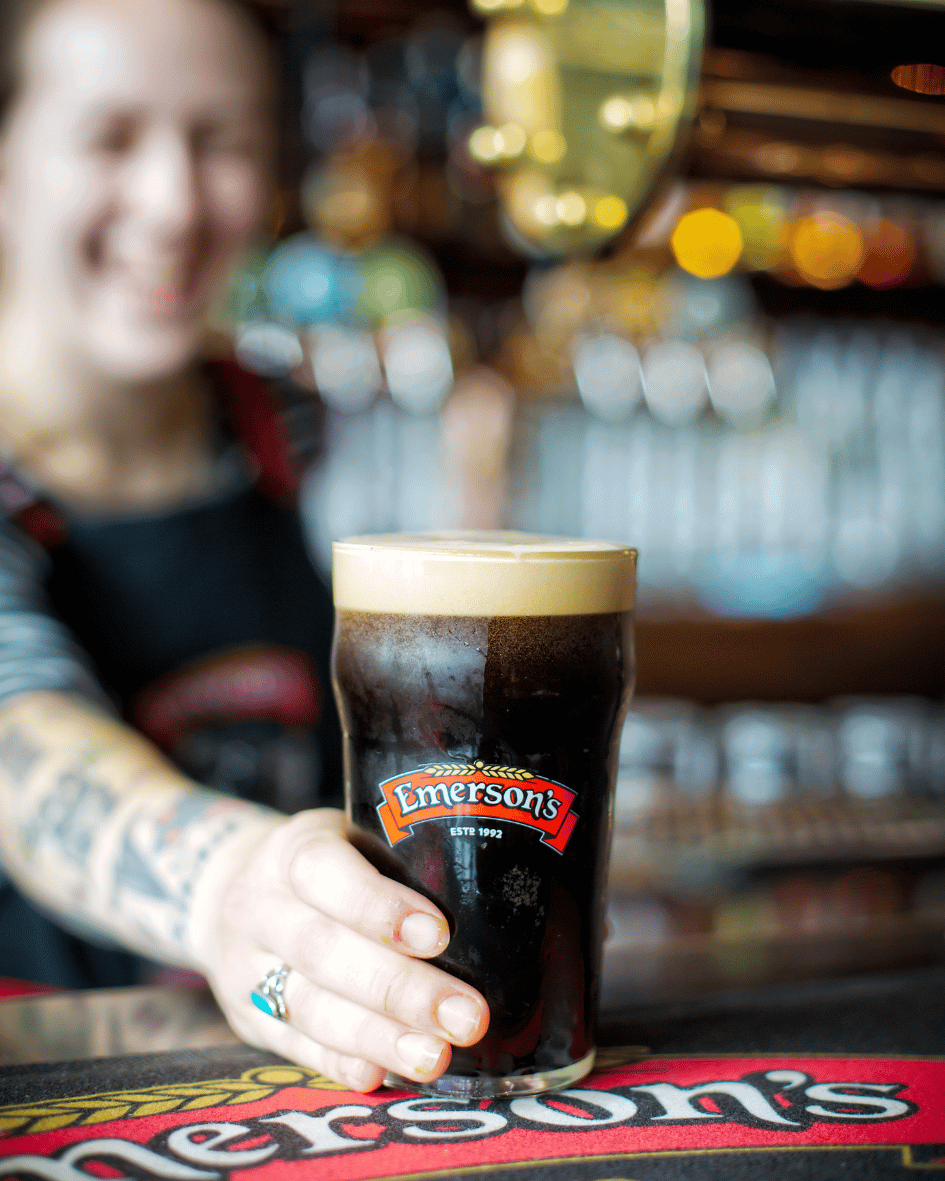
From a student flat to a brewery and restaurant, Emerson’s Brewery and Taproom opened in 2018 on Anzac Avenue and is a local legend!
Emerson's Brewery 1992: Armed with repurposed dairy vats and relentless passion, Richard Emerson launched Emerson's from a student flat. Widely celebrated as the godfather of Kiwi craft beer, Richard helped ignite New Zealand's independent brewing revolution.
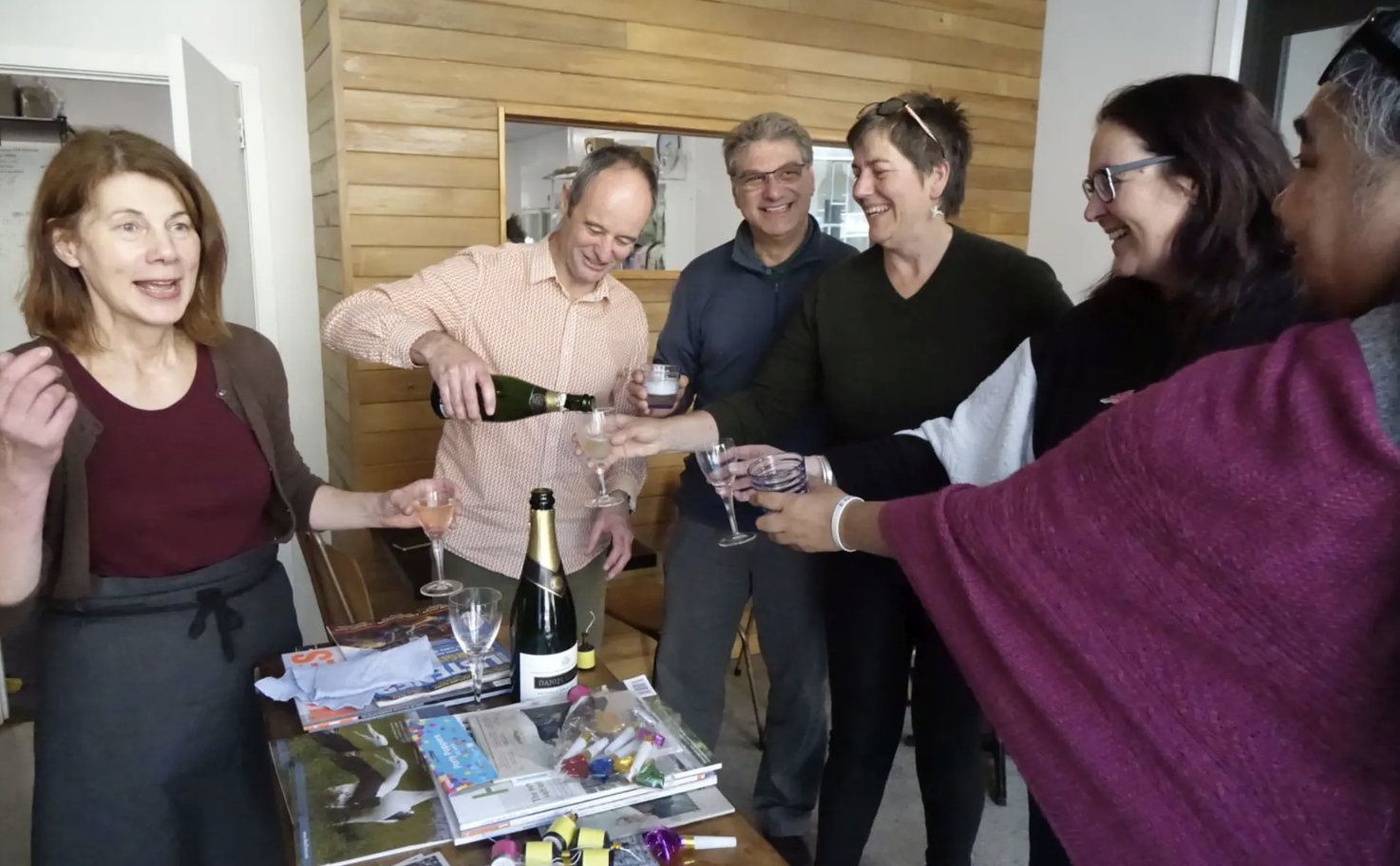
Photo from RNZ story which is here. Eat Drink Dunedin founder Nicola McConnell was part of the committee and is second from right.
November 2017: Following the announcement Cadbury was closing, a grassroots "Own the Factory" crowdfunding campaign raised $2 million in just over 30 hours. That southern determination funded OCHO, Otago Chocolate Company, ensuring Dunedin remains a capital of premium, ethical bean-to-bar chocolate craftsmanship.
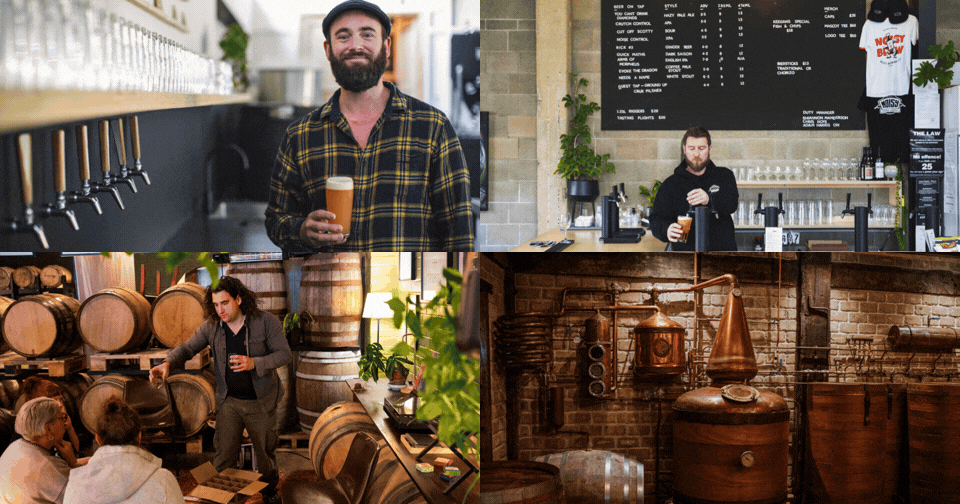
Dunedin is a city of brewers and distillers, talk to Eat Drink Dunedin about a tasting.
Today Dunedin brewers and distillers lead the way in premium tipples. No 8 Distillery pairs classic French techniques with Kiwi foraging; Sandymount Distillery produces solar-powered coastal gins; Dunedin Craft Distillers uses surplus bread to distilling premium spirits, brewers Noisy, Arc and Steamer Basin brew and open their doors as bars.